




Self-regulation allows children to slow down and control their impulses and behaviors. This is a very challenging but important skill for children to learn at an early age as they explore the world around them and learn routines for different parts of the day. Predictable environments and clear expectations can help children learn self-regulation safely.
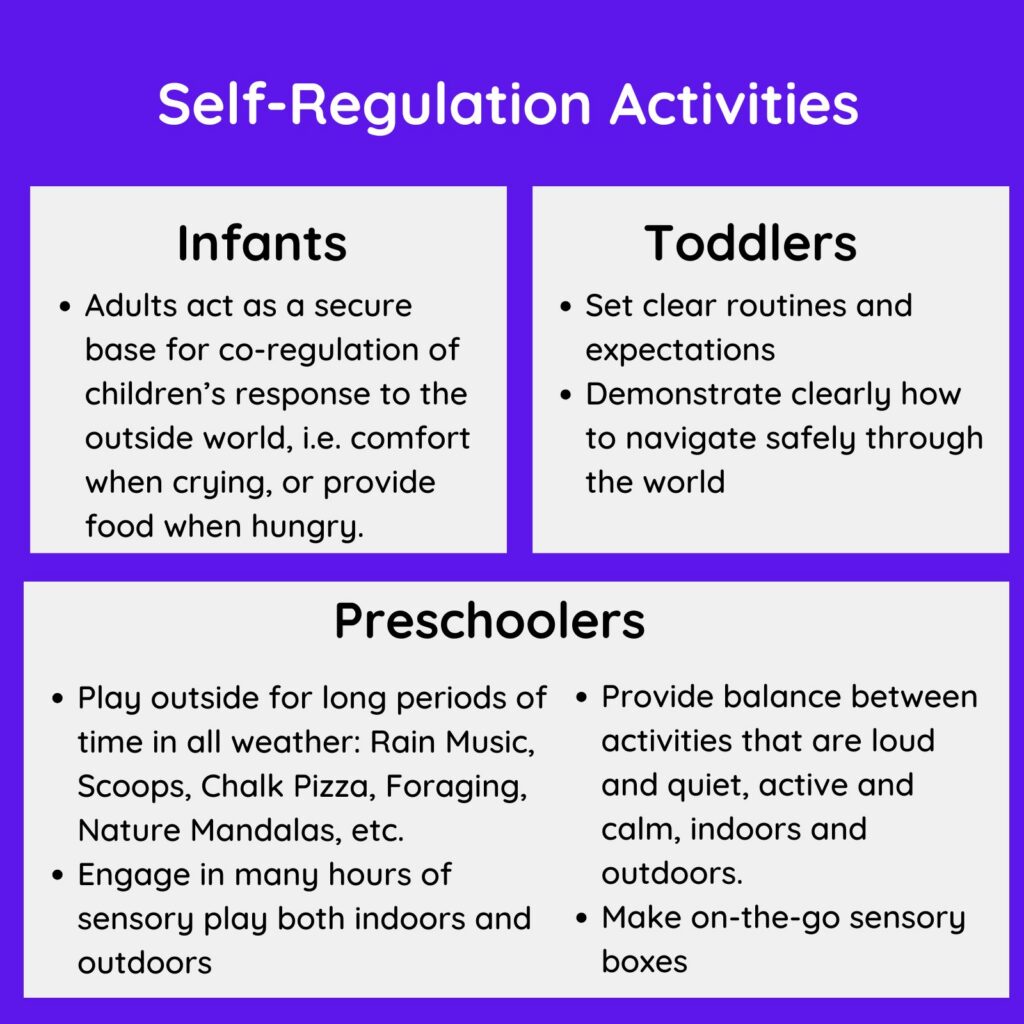
Self-regulation skills lay an important foundation for safety, friendship, and academic learning throughout life. For example, a child needs self-regulation skills to prevent them from running into the street or touching dangerous objects. Self-regulation helps children make friends, as they understand the importance of sharing toys or taking turns when playing a board game. And later in school, children will need self-regulation skills to sit for longer periods of time when it is time to learn how to read or to listen to instructions for a science experiment. Self-regulation falls under the umbrella of executive function skills, which are the cognitive and social-emotional skills associated with the human ability to make decisions, exhibit self-control, remember details, and reach important goals. There are many things that we as adults can do to help children develop their self-regulation skills. In infancy, emotional regulation starts with the presence of a caring, loving adult, as an adult gives them a safe place to sleep when they are tired, soothes them when they are crying, or provides food when they are hungry. In the toddler years, children thrive when adults provide a healthy balance between structure and freedom. For example, a clear schedule or routines help young children interpret what is expected of them at certain times or certain environments. Toddlers look to their caregivers to understand how to remain safe or where it is appropriate to delay gratification. In truth, it is not until about 3.5 years old that children start to develop the skill of self-regulation. In this stage of development, it is important for caregivers and educators to understand that it is our responsibility to put children in situations that require the appropriate amount of self-regulation, as this is a skill that young children are still developing. For example, in the same way that we would not expect a litter of puppies to sit down and learn in a rote academic setting, we also should not require young children to sit for long periods of time to do worksheets, memorize the alphabet, or practice filling workbooks with repeated letters. Th ese long periods of forced regulation might make it harder for children to exhibit self-regulation in scenarios where they do indeed need to be quiet, like in the library or at the bank, or when a sibling is napping. Caregivers can take care to work with children and their need for movement and sensory play to better set them up for success. While there are many techniques that help children to self-regulate, here we will focus on the importance of outdoor play as an important means of helping children to self-regulate naturally. Sunshine, space to move, and freedom to explore sensory materials—these are all great ways for children to release pent up energy so that when they do need to use their “indoor voice” at lunch, nap, or in public spaces, they already have had an outlet for expression. In this book, we include many prompts for rich outdoor play in all sorts of weather. If the weather is nice, grab a ball, chalk, or your favorite binoculars to head outdoors for lots of open-ended play. But we also encourage you to explore “imperfect” weather conditions. While many caregivers may dread rainy days as a day cooped up inside, we think this is a perfect time to make “Rain Music” with recycled metal materials. On a cloudy day, take children outside for a fun game of “Scoops” (Vol. 1, p. 160), as they use recycled laundry detergent jugs to scoop up balls around the yard or park. Or, if you are feeling like a gentler follow-up activity to do aft er a full day of exercise and outdoor activities, we highly recommend a morning of foraging and collecting natural materials to create art or “Birthday Mud Cakes” (Vol. 1, p. 116). All these activities will help children settle into their bodies that are constantly growing, changing, and expressing—which is exactly what they are supposed to be doing!
At Rayz Kidz, we’re here to support you, the make planning your week easy and your days joyful. To find activities that focus on opportunities for developing independence along with the other 29 important skills of early childhood development, explore the Rayz Kidz app and the Rayz Kidz curriculum.